My interest in creating the right pain scale for special needs individuals started with the aftermath of a surgical procedure. My autistic and verbally apraxic young adult person woke up from surgery in pain. He tore apart the surgical site and everything attached to it. He did well with every other aspect of the hospital experience as a result of our preparation: admissions, X-ray, changing into hospital clothing. I got blamed for his out-of-control reaction; and my response was: “What did you want me to do to teach “pain,” pinch him?” There were NO materials available to teach pain care communication at that time.

The common ten level pain scale choice is a No-Go for many individuals whose intelligence has been limited by frequent seizures or other memory impacting neurological events. Special needs individuals and/or young children experiencing under-treated pain is common. “Faces” is too hard to do, especially when the person asked to rate their pain is already stressed. Having under-treated pain in the past, can stress special needs people beyond their tolerances. Dealing with the unfamiliarity of a pain-causing event can also stress them significantly. They can tell about their pain; just not by choosing a number from 1 to 10 after listening to long directions given in a busy environment.

People with special needs require a tailored way to communicate pain level. Having the word “hurt” available is NOT enough to keep them comfortable and in good health. Most need a pain scale with strong visuals which they use every day. They might need: a musical practice mode, or one using sign language, or one with a scanning technique or a combination of inputs and outputs. My Pain Alert® Book has a lot of options, as well as troubleshooting suggestions, and well-regarded research references. A caregiver of a special needs person could expect that the medical provider will ask the severity of the individual’s pain. Having practiced this MPAS scale daily with your individual, you can ask them “Are you hurting?” and then the doctor gets their response directly. You can validate the reliability of that response. What a lovely way for the patient’s needs and the caregiver’s input to be taken seriously.
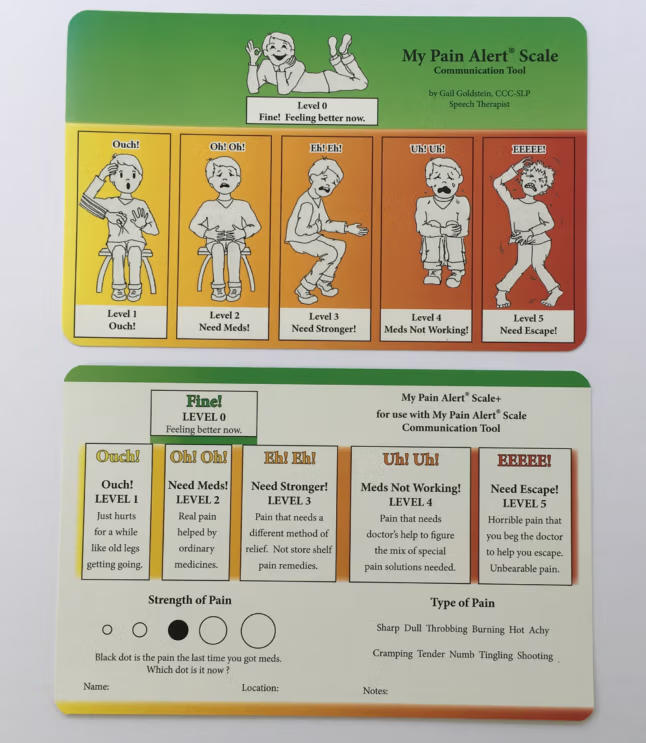
Regular practice of MPAS pain care vocabulary can counteract the knowledge erasing effect of seizures. Regular practice can build the special needs person’s confidence in their right to appropriate solutions for their pain. Daily practice of this pain care vocabulary, as a wellness check routine, can take just minutes. Have My Pain Alert® Scale card or poster handy to point to when you ask, “Are you hurting? or Are you fine?” As with any practice of augmentative communication, you presume competence. After significant practice, your special needs person might take the polyester card or poster off the bulletin board/refrigerator and bring it to you. I believe the individual not having to wait to be asked is a quality of life improvement for all who are involved.

My Pain Alert® Book is a 7mB download from major online book sellers: Kobo.com for Android, Amazon Kindle, and Apple books. The cover is the picture side of MPAS scale. The Word side of MPAS is the first page. This is intentional. MPAS use should be seen as an age appropriate activity. MPAS should always be available, particularly for special needs communicators who frequently have complex medical conditions.

Some autistic individuals will respond like our field trial children who listened to the My Pain Alert® level stories once and “got it.” Those children ran with it, using the MPAS level key words to alert their parents to their pain, and what they thought they needed. I was shocked, because I expected a slower learning curve. Other special needs individuals will do best with daily wellness checks using the scale . Some caregivers will pair the “Are you hurting?” interaction with use of an observational scale. We will blog about our favorites.
A big goal for a special needs individual is to have as much quality independence as they can safely handle. A person needs to be able to effectively express pain care needs autonomously to be a mature individual. My Pain Alert® Scale is a tool to help the individual be heard.
Subscribe to MPAS blog to comment