

Being old is hard work: adjusting to less ability, aches, pains, and dealing with help from others in an ever-changing world. Conveying your pain care needs to your medical providers through the perception and communication of a caregiver is not easy. My Pain Alert® Scale (MPAS) can help by providing the familiar words to express pain relief needs.
Pictured is the Word side of My Pain Alert® Scale (MPAS) designed specifically for adult patients. Five levels of pain are given as Key Words, then described in terms of what needs to be done. This method is doing what an adult patient has done all their life: recognize the pain, then the most reasonable fix for it. Doing something a person is familiar with is easier than doing something new to them, like rank ordering their pain experience history when they are currently hurting.
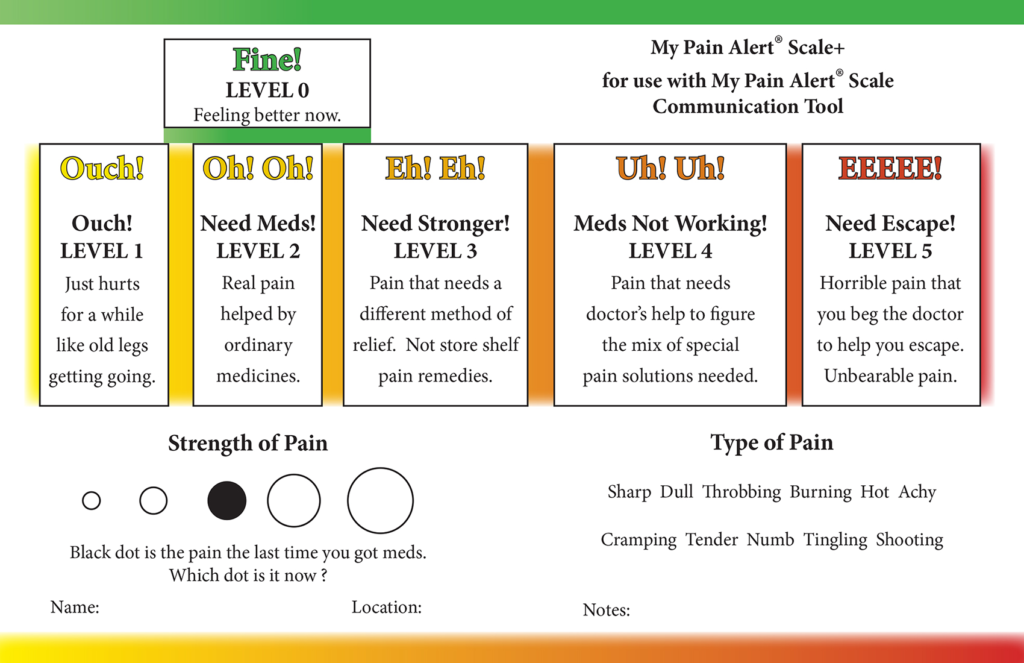
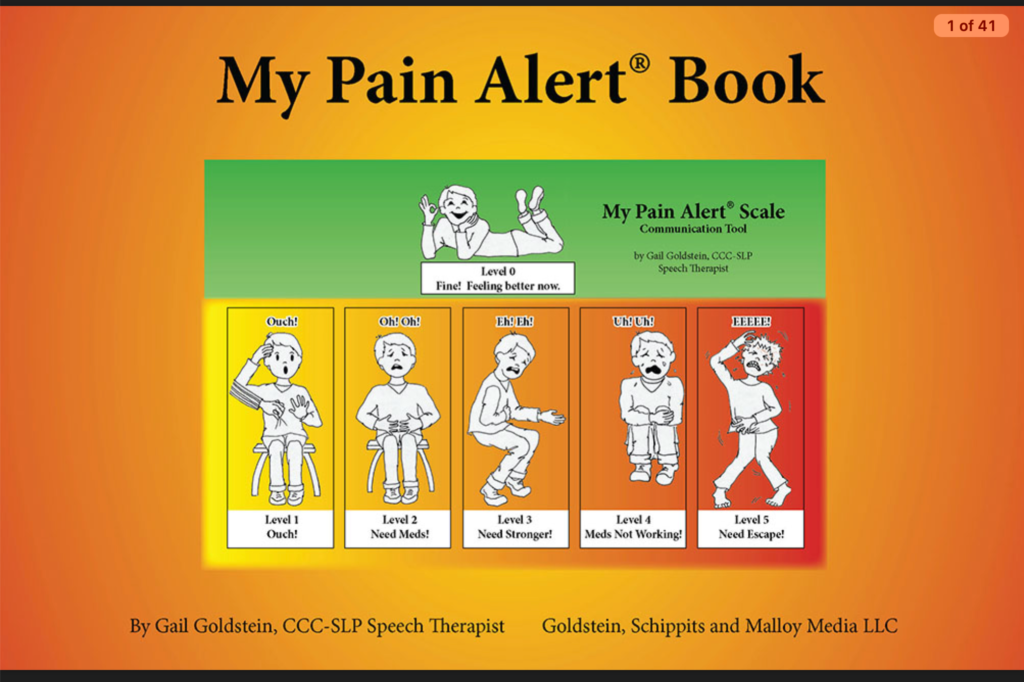
Research has shown that people with stroke, dementia, TBI (traumatic brain injury), or other neurological conditions can improve their ability to communicate needs with practice. Pain is a compelling need for practicing pain care words or sounds. Daily wellness checks using My Pain Alert® Scale card or MPAS poster are an easy way to practice. My Pain Alert(R) Book has a song which asks this question, then provides a verse with descriptions of each level of pain. Several ways of practicing responding are provided in the book: pointing, numbers, words, sign language or single vowel sounds. My Pain Alert(R) Book , a cellphone download, also has an Annotated Bibliography of references which you can click on and read for in depth pain and communication information.

The doctor turns to you, the caregiver, to ask the level of pain your loved one is experiencing. To keep the patient from being left out of the interaction, or worse under-treated for pain use My Pain Alert® Scale to show the doctor a “Wellness Check.” We recommend daily practice using the card to ask how they feel. Practice strengthens response. Doing wellness checks often with MPAS assures the caregiver that the patient is coping, and no new pains have shown up.
A Wellness Check involves having MPAS within the patient’s visual field, and pointing to the hurt boy icons as you ask: How are you? Are you hurting? or Are you fine? while point to the boy on his stomach showing “okay,” then waiting for a response. If the patient needs more than the pain level word or phrase cue from the MPAS card, then introducing and practicing responses to one or two pain level stories at a time from the MPA book is recommended.
MPAS meets communication needs of the caregiver, the patient, and the doctor. The caregiver can help the patient review their current aches, then convey information to the medical provider. When there is a change in the patient, detailed notes are particularly helpful to the medical provider. The patient, particularly one with word-finding issues, can be successful when choosing from a set of words to describe what they are experiencing. Visuals for some pain types are in the How are you hurting? page of My Pain Alert(R) Book. Using the Strength of Pain graphic gives the patient a way to express the effectiveness or lasting power of their most recent medications. Provide the doctor with a 10-level pain scale number by multiplying the MPAS level number by two. Add level keywords when reporting patient’s current condition. Time pressure is a fact of medical care. So is stress. MPAS can help with both.
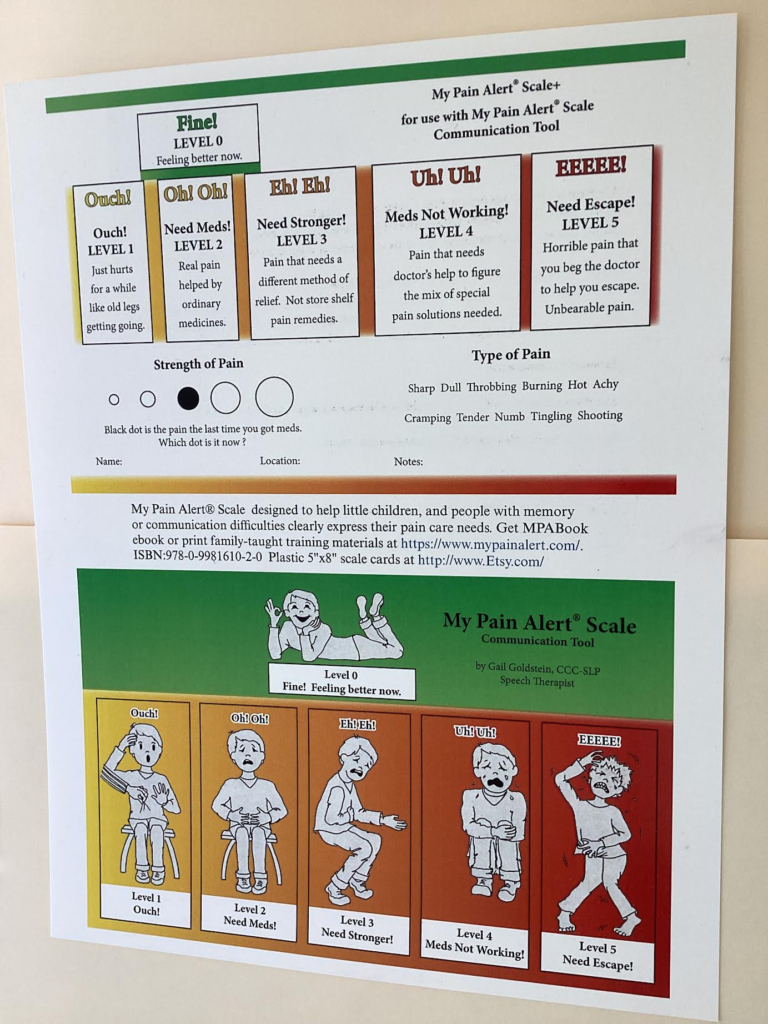
Shown above is My Pain Alert® Scale 8.5 x 11 inch Poster of both picture and word side of our pain scale. It is perfect to hang on the refrigerator or on a bathroom wall at the patient’s eye level. It is made of the same wipe-clean polyester as the the MPAS cards. The blank back of the poster can be laser printed with the words translated or transliterated into the patient’s first language. This is another way My Pain Alert® products can be customized to support and enhance the patient’s quality of life.
Link to Special Needs Pain Communication
Subscribe to MPAS blogs and give us your input.